
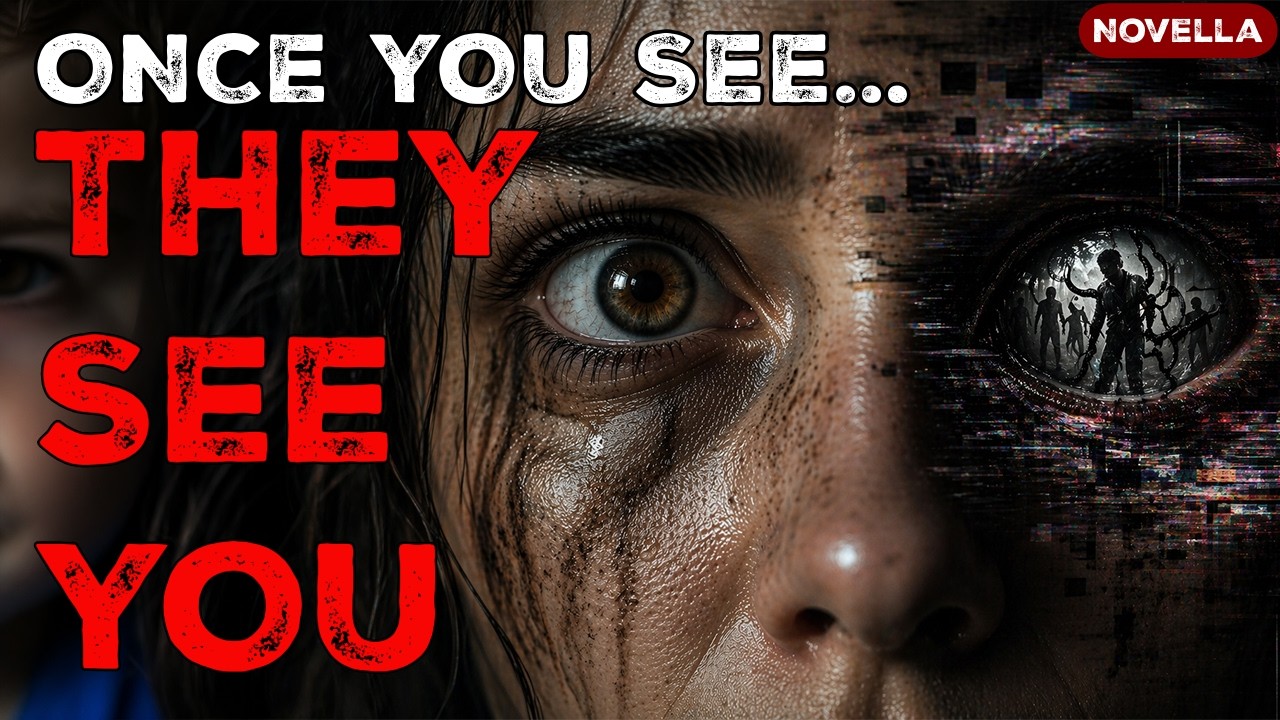
The vault had been sealed from the outside.
That was the first thing Reyes said when the ground-penetrating radar flagged the anomaly. “Sealed from the outside, Dr. Brooks.” She nodded and kept walking toward it across the hardpan without answering him, because she already knew that wasn’t the whole truth.
She’d read the missing persons file on the transport out. Compound resident, New Zion settlement, last recorded location approximately forty meters northeast of where she was currently standing. Disappeared March 3027. No body recovered. No explanation filed. The Institute had classified it and moved on, and four hundred years of desert had buried the rest.
The main team was two kilometers southeast, excavating the primary New Zion site. They had the funding, the equipment, the media liaison, the whole apparatus. Jessica had six people, a portable shade structure, and a radar anomaly the Institute had assigned her to document and contain, which was Institute language for look at it, don’t touch anything important, report back.
She was already planning to touch something important.
“Brooks,” Davan jogged up beside her, tablet in hand, sweat darkening his collar in the eleven o’clock Mojave heat. Twenty-six years old, brilliant, constitutionally incapable of patience. “Scans are back. The metal, the composition is wrong for the period. This wasn’t built with New Zion’s resources. Someone brought this in.”
“I know.”
“You know?” He looked at her. “How do you know?”
“Because it was meant to be found.” She stopped at the perimeter marker Maren had staked out that morning. The ground here was cracked, alkali flat, pale as bone, with a rusted edge of metal barely visible where the seismic activity last spring had heaved the earth. Four hundred years of desert. And it was still here. “Something that’s meant to be found always gets built to last.”
Reyes was already at the perimeter, crouching, not touching. Fifty-one years old, careful in the way that only people who’d seen things go wrong developed. He’d been with her for eleven years. He looked up when she approached, and his expression said what he wouldn’t, this one feels different.
She crouched beside him. The metal was dark, corroded on the surface, but solid underneath. She could see the seam of the door from here. And she could see, even from this angle, that the weld ran along the inside edge.
He crouched beside her. “I was wrong about the outside. Look at the weld.”
“Sealed from the inside,” Reyes said quietly.
“Yes.”
“How does something seal itself inside a vault and then…”
“I don’t know yet.” She stood. “Get Maren. Start cutting.”
It took six hours.
The Mojave in late afternoon was a particular kind of brutal, the heat pressed down from above and radiated up from the ground simultaneously, nowhere to escape either direction. Jessica stood in the shade structure with her tablet and her water and the missing persons file she’d already memorized, and she watched Maren work the cutting equipment with the focused economy of someone who’d learned not to waste motion in the heat.
Davan paced. He’d been pacing for four hours.
“You’ve read something,” he said, stopping beside her. “About this specific site. You had that face when we got the radar results.”
“I have a lot of faces.”
“You have three faces. Thinking, annoyed, and I know something you don’t. That was the third one.”
She looked at him. He was going to be extraordinary in twenty years, when he learned that the most important skill in this work wasn’t intelligence, it was the willingness to sit with not knowing. He didn’t have that yet. He burned too hot and too fast, and he pushed when he should have waited.
She recognized it because she’d been the same way at his age.
“There was a disappearance,” she said. “From this compound. March 3027. The Institute classified it.”
“Why?”
“Because the man left a document. And the document said things the Institute didn’t want circulating.”
Davan stared at her. “What kind of things?”
Before she could answer, Maren called from the vault, “she’s through.”
The air that escaped smelled like copper and burned hair.
Jessica went in first. That was protocol, lead scientist first, team holds at the threshold until the environment is assessed. But she would have gone first anyway. She’d been moving toward this vault for longer than she could fully explain, pulled by something she’d been calling professional intuition for months and was only now beginning to suspect was something else.
Inside: one handwritten document on a metal table. No body. No remains. No ash. Just words written in something that tested, when Maren ran the quick kit twenty minutes later, as 60% human blood, 40% unknown organic compound.
And the walls, every surface, covered in scratch marks. Not random gouges. Deliberate patterns. Some scratched from the inside, clawing outward, frantic, defensive. Some scratched from the outside, clawing in, methodical, hungry. Some clawed from directions that don’t have names.
“Brooks,” Reyes, at the threshold. She could hear Davan behind him, trying to see past. “What is it?”
“A document.” She didn’t move toward it yet. She was looking at the scratch marks. At the ones that came from directions that shouldn’t exist. “Give me a few minutes.”
“The air composition…”
“Is fine. Maren checked it.” She turned to look at him. “A few minutes, Reyes.”
He held her gaze for a moment. Then he nodded and pulled the door, not closed, but mostly. She heard him telling Davan to step back, and Davan’s protest, and Reyes’s voice dropping into the register he used when the conversation was over.
Brooks turned back to the document, still sitting on the table, and began reading.
My name doesn’t matter. By the time anyone reads this, I’ll either be dead or something else entirely.
She picked it up. Her hands shook.
She told herself it was the heat.
I saw them for the first time three days after my body started working again.
December 3026. My throat had closed up first, not physically, but experientially. Then my sinuses filled with pressure that made my teeth scream. Then the headaches: not pain exactly, but presence. Something taking up space inside my skull that wasn’t supposed to be there.
The compound medic couldn’t explain it. Blood tests came back normal. The old portable scanner they kept for emergencies showed nothing.
I started eating differently. Real food. Meat and greens and bone broth, things with substance, with life in them. Within weeks, something shifted. My body strengthened. The fog thinned. I understand now what that fog was, not illness, not stress. Suppression. They’d been keeping me just weak enough that my nervous system couldn’t process what it was hosting. When I got stronger, the suppression failed.
And I started to see them.
Not clearly. Not at first. Just shapes in my peripheral vision when I looked in mirrors. Shadows that moved wrong. Geometries that shouldn’t fit inside three-dimensional space but somehow folded into the corners of my vision anyway.
Abstract. Organic. Wrong.
They looked like oil on water, if oil could have depth and water could have teeth. And they were everywhere.
Not just in me. In everyone. Attached to the backs of my neighbors’ heads like shadow-tumors. Wrapped around their throats like silk made of absence. Jim next door had three of them, one behind each eye, one coiled in his chest cavity like smoke pretending to be a heart.
And behind all of them, barely visible even to my new sight, something else. Larger shapes that moved through the walls themselves. Watching the parasites the way a farmer watches livestock. Patient. Waiting.
I told Jim. Knocked on his door at 0700, tried to explain what I could see coiled behind his eyes. He smiled at me the way people smile at the newly converted. Called it prophetic sight. A blessing.
He wasn’t surprised. That was the thing that stopped me cold. He already knew. He’d been calling it something else his whole life.
The truth was different. This wasn’t sight. This was recognition.
My body had gotten strong enough that it could no longer hide them from me.
Jessica set the page down.
Not because she needed to stop. Because her hands had started shaking badly enough that she was having trouble holding the pages steady, and she needed a moment to get her body back under control before she kept reading.
Palm flat against the metal table. Cold. Solid. Real.
The scratch marks filled her peripheral vision no matter where she looked. She’d stopped trying to avoid them. Some were frantic. Some were methodical. The ones from the wrong directions she couldn’t look at directly, only sideways, only half-seen, the way you look at something bright.
She’d been feeling something behind her eyes for months, called it stress, called it the pressure of the dig, the politics of the Institute assignment, the particular exhaustion of two hundred and thirty-four years of accumulated professional weight. She was good at naming things. She’d built a career on naming things accurately.
She picked the document back up.
I was born in New Zion, one of the last fundamentalist holdouts that refused the neural scanning mandates. My parents believed the scanning was the Mark. They taught me that God alone could see into the human heart. Ironic, given what I understand now.
I’d lived two hundred and seventeen years thinking the weight in my head was normal. The frequency behind my eyes. The subsonic hum. The certainty of worthlessness embedded in my nervous system.
The elders called it “conviction of sin.” I believed them. I prayed for relief. I fasted. I confessed.
But conviction moves you toward something. Real conviction is the Holy Spirit pointing a direction, here is what’s wrong, here is the way back. It produces sorrow that leads somewhere.
This never led anywhere. It just fed.
The weight never lifted.
What I didn’t realize was that I’d inherited them. Back and back and back, generations deep, bloodline contamination so old no one remembered a time before.
Outside the compound, the Detection cities thought they’d eliminated the parasites with science. Inside New Zion, we thought the weight was God’s hand on us, conviction, refinement, holy discomfort. Both sides had built entire systems around not seeing what was actually there.
The ancients called them demons. The scientists call them parasitic consciousness entities. Both are wrong. Both are right.
They’re thoughts that learned to feed.
Outside, Jessica could hear Davan’s voice, muffled through the vault door, impatient, asking Reyes something she couldn’t make out. Then Reyes’s reply, but quieter. Then silence.
Jessica thought about her daughter.
Lena was twenty-three, living in Detection City Number Four, clean and scanned and free of the parasites by every measure the Institute had. Which meant nothing. She called twice a month. She was happy, or she said she was happy, and Jessica had learned over two hundred years to hear the difference between those two things, and lately she wasn’t sure which one she was hearing.
The weight behind Lena’s eyes had always been there. Jessica had assumed it was inherited grief. The grief that ran in their family like a watermark.
Jessica picked the document back up and kept reading.
But something else was wrong.
The Detection cities, the places where neural scanners hummed 24/7 and everyone was clean, everyone was free, those cities were dying.
Not all at once. Not obviously. But the reports filtered through, even to our compound: disappearances. Suicides that made no sense. Entire families found dead with no explanation, no struggle, no marks.
The official reports called it “Post-Cleanse Adjustment Disorder.” The price of freedom from the parasites.
But I started to wonder: what if it wasn’t the price of freedom? What if it was the price of exposure?
Jessica stopped.
She’d written three of those reports. Not personally, she’d been on the review committee, one of twelve scientists who’d looked at the Detection city mortality data and signed off on the official classification. Post-Cleanse Adjustment Disorder. A real phenomenon, they’d concluded. Documented, studied, statistically significant, but within projected parameters.
She’d believed it. She’d signed her name to it.
She sat with that for a moment.
The vault was quiet around her, the scratch marks still, the document still, the air doing something to the light that made the walls look closer than they were. But the ones from the wrong directions seemed, in her peripheral vision, slightly warmer than the others.
Jessica’s eyes dropped back to the words on the document.
The shower was where it peaked.
The compound at 0300 was its own kind of quiet, solar panels dark, the perimeter lights amber, prefab walls holding the desert cold out by pure stubbornness.
Everyone asleep. I stood under scalding water trying to breathe through the feed.
That’s what I started calling it. The feed. Because that’s what it was, an automatic, sustained broadcast of pure distilled wrongness pumped directly into my consciousness. Not thoughts. Not even words. Just the emotional certainty of worthlessness delivered at a frequency my conscious mind couldn’t parse, but my nervous system understood perfectly.
Every failure compressed into one transmission: you deserve this. The taste of copper. The smell of rot. The certainty burrowing deeper with each breath.
The feeling of claws, not real claws, but the idea of claws, dragging across wounds that stayed perpetually open.
I tried everything I’d been taught. Meditation: failed. Prayer: failed. Rebuking in Jesus’ name: failed. Casting out in the name of the Father: failed.
The feed didn’t care about my theology.
The difference, I understand now, wasn’t the words. It was the posture. I’d been asking. Petitioning. Requesting that they leave. But you can’t petition something that doesn’t recognize your authority to make requests. There’s a difference between a prayer and a verdict. I didn’t know that yet.
I tried logic. Reason. These aren’t real. They’re just thoughts. I can choose different thoughts.
But they weren’t thoughts. They were entities. And they were laughing.
Not audibly. But I could feel it, the equivalent of laughter in whatever sensory channel they operated on. They enjoyed my attempts to resist. Every effort to push them away confirmed they were separate. Made them more visible. Made them stronger.
Activate evil with acknowledgement.
I started to understand: they’d survived for millennia by being invisible. By mimicking their hosts so perfectly that the host never thought to fight back. They were parasites that had evolved, or been designed, or spontaneously emerged from human suffering itself, to sound exactly like you.
By the time you realized they weren’t you, they’d already been feeding for decades.
The vault had gotten warmer. Or she had. She couldn’t tell anymore which surfaces she’d touched and which she hadn’t.
The vault door opened three inches.
“Brooks,” Reyes said. Low voice, careful. “It’s been forty minutes. Davan is…”
“Tell him to catalogue the exterior scratch mark patterns. Full documentation, every surface, centimeter by centimeter.” She didn’t look up from the document. “That should occupy him.”
A pause. “Are you alright?”
She looked up then. Reyes was watching her through the gap in the door with the particular expression he got when he was deciding whether to push. He’d worked with her long enough to know when she’d found something real. He’d also worked with her long enough to know that when she got that look, pushing didn’t work.
“I’m reading,” she said. “Give me time.”
He held her gaze for another moment. Then: “I’ll be right outside.”
“I know.”
The door closed again. Jessica turned back to the document.
That night, I couldn’t sleep. The feed was too loud. I went to the archives, not looking for answers, just somewhere quiet.
I found the old document by accident. A handwritten manuscript from 1713, wedged between prayer manuals and apocalypse prophecies. The parchment was brittle, yellowed at the edges in the specific way that meant it had been handled, not stored, handled, passed from person to person across three centuries, each reader’s fingers leaving their oils in the grain. Someone had stitched the binding twice. The second stitching was newer, careful, done by someone who wanted it to survive. The ink had faded to brown, but the pressure of the original hand was still visible in the page itself, someone who wrote hard, who meant every word to go deep.
Written in the margins: This worked. God help me, this actually worked.
It had been catalogued, probably during the Detection Era, as “Anonymous, Pre-Detection Testimony.”
The title was simple: “Curse Them Out.”
I read it by candlelight. Every word felt like it had been written specifically for me. The author described the same feed. The same pressure. The same inherited curse. The same desperate attempts to fix it with meditation and therapy, and logic. And then he described what worked: violent verbal rebuke.
Not polite prayer. Not gentle resistance.
Violence.
I sat with that word for a long time. I’d been raised to believe that violence was what happened when holiness failed. That the spiritual life was the life of increasing gentleness, increasing patience, increasing surrender. Two hundred and seventeen years of that formation. Two hundred and seventeen years of swallowing the feed and calling the swallowing virtue.
The anonymous author said otherwise. He said the old saints knew something we’d forgotten, that there is a kind of enemy that reads gentleness as permission. That interprets your willingness to endure as consent. That has been feeding on your silence for so long, it has confused your silence for invitation.
He invoked Jesus cursing the fig tree. Not healing it. Not redeeming it. Pronouncing death on something that only consumed without ever producing. That’s what the exorcism was, not a request. A verdict. The authority to speak judgment into a thing that had no right to what it was taking. Jesus pronounced judgment on something that feeds without bearing fruit.
I understood, reading that, why the elders had taught us never to speak the sacred names casually. Not because the names were fragile. Because they weren’t. Because words spoken with full weight in full authority do something to the air around them. The old saints knew this. They handled those names the way you handle a blade, carefully, deliberately, only when the moment required it.
This was the moment.
Jessica looked up and paused. Thoughts jumping around. She took a few deep breaths and continued reading.
The last section that made my hands shake. The anonymous author wrote that when you pray for peace during war, God doesn’t give you comfort. He gives you a weapon. When you ask for relief and receive something sharp in your mouth, words that cut spiritual flesh, don’t refuse it. Don’t be surprised. That’s the sword. And it’s the only thing that works.
I set the manuscript down.
I read the marginal note again: This worked. God help me, this actually worked.
The first time I’d read it, I’d felt relief. Someone else had done this. Someone else had survived.
But now, sitting with it, I heard something different in that note. Not triumph. Not gratitude. Something closer to the sound a man makes when he opens a door and can’t close it again. The “God help me” wasn’t praise. It was the beginning of a prayer that hadn’t finished yet.
Jessica licked her lips and continued.
The anonymous author had performed the exorcism, the curse. The same curse Jesus performed on the fig tree. And then what? He’d written a manual and passed it on, but had he ever said whether the trade was worth it? Had he ever said what came after?
He hadn’t. The document ended at the sword. Everything after was margin notes and silence.
I sat in the archive for a long time after that. Thinking about the Detection cities. The suicides. The families found dead with no marks.
What if the scanners hadn’t removed the parasites at all, just silenced them? Made them invisible, unmeasurable, feeding in the dark with no name anyone could use? What if the “Post-Cleanse Adjustment Disorder” wasn’t adjustment at all? What if it was just the feed, continuing exactly as it always had, in people who no longer had any framework to recognize it?
Not exposure. Erasure. They didn’t strip the insulation. They erased the map and left people lost inside the same dark, with no name for what was eating them and official confirmation that nothing was there.
What if the parasites were the mercy?
Jessica stopped reading.
She’d spent thirty-two years calling her feed, grief. It had seemed like the honest name for it, the feed, that arrived the morning Cara died and never fully left. She’d never once considered that the weight had been there before that.
She sat with that.
That it had been there her whole life, and the grief had just given it a face she could recognize. Two hundred and three years before Cara. Before the corridor. Before the doctor’s face. The feed hadn’t started with the loss. The loss had just given it a face she could finally recognize, a shape she could point to and say: that’s why. Grief was a clean explanation. Grief made sense. Grief meant the weight was hers, earned, proportional, human.
The alternative was this.
She thought about the Detection city reports. She’d sat on that review committee for four months. Twelve scientists. The mortality data had been real, the suicides, the families, the disappearances, and they’d looked at it and named it and signed their names to the naming. Post-Cleanse Adjustment Disorder. She’d believed it because the data supported it and because the alternative required seeing something the Institute’s instruments couldn’t measure.
She’d been one of the people who told the world the parasites were gone, and the price of freedom was acceptable.
She’d written that with her own hand.
She’d believed it with a mind that had been partially eaten for two hundred and thirty-four years.
Outside, the wind moved across the hardpan. Davan’s voice had gone quiet.
She turned the page and kept reading.
I almost put the document back.
I want to be honest about that. I almost put it back between the prayer manuals and the apocalypse prophecies and walked back to my quarters and lived with the feed for whatever years I had left. Two hundred and seventeen years with the weight behind my eyes, I knew how to survive it. I knew its rhythms. I knew how to function inside its noise.
What came after the silence, I didn’t know at all.
But then I thought about my daughter.
She was fourteen. She’d never known a moment without the feed, I understood that now. She’d been born into it. She’d always thought the weight behind her eyes was just how existing felt. She’d never questioned the certainty of worthlessness because she’d never known a morning without it.
And I thought: she deserves to know it isn’t her.
I picked up the document again.
I told myself it was for her.
I’ve had three days to think about whether that was true.
Brooks pressed her palm against the vault wall.
Warm. The metal was warm where her hand touched it. That shouldn’t have been possible, the interior temperature had read eleven degrees cooler than outside when Maren ran the environment check. Metal held cold.
She thought about Lena.
Lena had been twenty-three months old when Cara died. Jessica had been holding her when it happened, standing in the hospital corridor with Lena on her hip, waiting for the doctor to come out, and then the doctor came out, and his face said everything before his mouth did. She’d stood there holding her daughter, and she’d felt something close behind her chest like a door she couldn’t find anymore.
She’d stopped praying six weeks later. Not dramatically. Not in anger. Just quietly, the way you stop calling someone whose number no longer connects. The line was there. She simply couldn’t make it work.
The feed had been loudest in those years. She’d called it grief then. She still called it grief. She wasn’t sure anymore that those were different things.
Jessica turned back to the document and kept reading.
I knelt in my quarters that night. Not because I wanted to pray, because my legs wouldn’t hold me anymore.
I expected comfort. I expected gentle reassurance. Maybe a sense of presence, a warmth, the feeling that everything would be okay.
That’s not what I got.
The room got colder. Or hotter. Or both. Temperature stopped meaning what it usually meant. The air got dense, like atmosphere pressurized until it became something you could lean on.
And I felt it arrive.
Not in my hands. In my mouth. Words sharp enough to cut spiritual flesh. Authorization. Permission. A blessing to do harm.
God hadn’t given me peace.
He’d armed me.
The document was right. When you ask for relief, and you’re at war, you don’t get comfort. You get a weapon. And then you have to fight for your own freedom.
I held that for a moment. The weight of it. The gift that wasn’t comfort.
I thought about the anonymous author. God help me, this actually worked.
And I thought: God is giving me the same sword He gave him. The same weapon. But no promise about what comes after.
I stood anyway.
In the vault, Jessica held the document against her chest for a moment without reading it. Just held it. The metal walls were warm now in the late afternoon heat bleeding through from outside. She could hear Reyes moving at the threshold, not entering, just present. Keeping watch the way he always did.
Jessica found her place and continued reading.
I stood. Closed my eyes. And I started screaming.
Not out loud. I couldn’t risk waking the compound. But internally, with a volume that had nothing to do with decibels, I screamed.
Every profanity I had. Every curse. Every harsh word I’d been taught never to say. Every word the elders called sin, and the therapists called destructive. I dragged them all up from wherever language goes when you’ve spent two hundred years swallowing it.
I wasn’t praying. I was attacking.
The shapes in my peripheral vision flinched.
Good.
Brooks’s hand tightened around the pages. She realized she’d stopped breathing.
I pushed harder. I went after them, didn’t wait, didn’t negotiate, didn’t ask. I invoked every name of God the elders taught us never to speak casually. Not as prayer. As weapon. The Tetragrammaton swung like a blade. Violent. Incorrect. I didn’t care.
I cursed them in English and Hebrew and Spanish and sounds that might not have been language at all, just vibrational force wrapped in intent, just two hundred and seventeen years of accumulated fury finally given a direction to move in.
They started pulling away from the walls, from the corners, from behind my eyes.
And then they started screaming back.
The feed went from background hum to emergency shriek, every wound ripped open simultaneously, a last desperate attempt to remind me what I’d lose if I kept going. I felt them pulling. Tearing. Trying to hold on.
I went harder.
The sword kept cutting. I didn’t let up. I understood now that mercy here was just another word for losing.
And then I saw them, really saw them for the first time. They weren’t shadow-shapes anymore. They were almost-bodies. Organic abstract horrors that looked like internal organs turned inside-out and given locomotion. They looked like the geometry of suffering made manifest. They looked like hunger with a face that kept shifting between familiar and alien.
And I recognized them.
That was the worst part. I recognized them. The one behind my left eye had the shape of every failure I’d ever catalogued. The one coiled in my chest was the exact weight of the moment I first decided I was the problem. They hadn’t just been feeding on me. They’d been wearing me. Using my own memories as camouflage. By the time you see them clearly enough to fight them you understand why you never fought before, because fighting them felt like fighting yourself.
I fought anyway.
And they were leaving.
One by one, they peeled away from my nervous system like roots yanked from soil. I felt every separation. It hurt worse than anything I’d ever experienced, worse than breaking bones, worse than sickness.
Because they’d been part of me. Not just in me. Part of me. And removing them meant removing pieces of what I thought was my own consciousness.
I kept cursing. I didn’t stop. I cursed until my internal voice was hoarse with effort, until there was nothing left in me but the sword and the will to swing it.
And then…
Silence.
Real silence.
The feed cut off like someone had severed a cable. The shapes were gone. The pressure released. The frequency stopped.
I stood in my quarters, shaking, and I felt… hollow.
Not bad hollow. Empty hollow. The space where the parasites had lived was just… space. Raw and unused, and mine.
I’d entered my real body for the first time in two hundred and seventeen years.
The silence had a texture I hadn’t expected. Just, absence. The way a room sounds different after you’ve moved the furniture out. Same dimensions. Different acoustics.
I kept waiting for the next thought to arrive and I realized it belonged to them. That was the habit of two hundred and seventeen years every impulse interrogated, every instinct suspected. Is this me or is this the feed? I didn’t know how to stop asking the question just because the answer had changed.
I stood there for a long time.
The space where they’d lived was mine now. Raw. Unused. And I realized I had no idea what I actually wanted. I had only ever known what I wanted relief from. I had never once asked what I actually wanted. Those are different questions and I had only ever lived inside the first one. The feed had been the weather of my interior life for so long that I’d built everything around it, my prayers, my confessions, my relationships, my understanding of who I was in relation to God. All of it was load-bearing on something that had just been removed.
I didn’t know what I liked. I didn’t know what I believed when nothing was distorting the signal. I didn’t know if the gentleness I’d always felt toward strangers was mine or just the absence of aggression the feed had been redirecting inward. I didn’t know if my faith was real or just the coping structure of a man who needed somewhere to put the weight.
Two hundred and seventeen years of renting my own consciousness. And now the tenant was gone and I was standing in rooms I’d never actually lived in.
That was the part nobody warned me about. Not the 1713 author. Not the marginal note. The document ended at the sword, same as his did.
Everything after the silence was mine to figure out alone.
Jessica set the page down.
The vault’s polished metal wall threw back her reflection, unfamiliar somehow, like a word you’ve said too many times until it stops meaning anything. She’d been in here for hours. Outside, she could hear Davan’s voice, something about the weld composition, the particular pitch he got when he was building toward a theory he wanted her to validate.
She thought: he has no idea what he’s standing next to.
She thought: neither did I, this morning.
She picked the document back up.
I should have been grateful. I should have thanked God and slept and woken up free.
But something was wrong.
The silence was too complete. The emptiness too vast. I’d removed the parasites, yes, but in doing so, I’d removed something else.
Some weight I couldn’t name. Some presence that had been holding me together even as it fed on me.
I looked in the mirror.
My reflection looked back.
And I saw, just for a moment, just in the corner of the glass…
Other shapes.
Not the parasites. Something else. Larger. Older. Watching.
The parasites, I realized with dawning horror, hadn’t been predators.
They’d been prey.
And by removing them, by making myself visible through the act of cursing exorcism, I’d attracted the attention of something higher up the food chain.
The anonymous author had written God help me, this actually worked.
Now I understood the grammar of that sentence. Not this worked, God help me. But God help me, first, most urgently, this actually worked.
The horror wasn’t that it failed.
The horror was that it didn’t.
Reyes opened the door.
Not a crack this time. He came in, and Jessica could tell from the set of his shoulders that he’d decided the conversation was happening whether she wanted it or not. He stopped just inside the threshold, taking in the scratch marks, the table, the document in her hands. His face stayed careful. Reyes had an exceptional face for fieldwork, it gave very little away, but what it gave was always accurate.
“Maren wants to run a second environment scan,” he said. “And Davan has finished the exterior documentation and is now theorizing loudly about the weld composition.”
“Let him theorize.”
“Brooks.” He looked at her directly. “You’ve been in here for two hours. You haven’t called anything in to the Institute liaison. You haven’t run documentation protocol. You’re sitting in an uncleared vault reading a primary artifact with your bare hands.” A pause. “What is it?”
She looked at him. Eleven years. He’d followed her into three situations that should have ended careers, and his face through all of them had been exactly what it was now, not fear, not judgment. Just the steady attention of someone who needed to understand what they were walking into.
“It’s a first-person account,” she said. “From the man who disappeared from this compound. He sealed himself in from the inside.”
Reyes was quiet for a moment. “How?”
“I don’t know yet. I haven’t finished reading.” She looked down at the document. “But I think when I do, I’ll understand why the Institute classified it.”
He looked at the document in her hands. Then at her face. Then back at the document.
“Is it dangerous?”
She thought about the question honestly. “I think it’s true,” she said. “I think that’s the same thing.”
Reyes stood there for a moment longer. Then he nodded once, the nod he used when he’d decided to trust her past the point where trust made conventional sense, and pulled the door closed behind him as he left.
She turned back to the document.
My heart stopped at 0347 hours, March 13th, 3027.
The knowledge came with absolute certainty. The final beat. The silence after. My body hitting the floor.
I was dead for four minutes.
What happened in those four minutes, I can’t fully describe. Language wasn’t designed for it. But I’ll try.
I saw the architecture.
Not in theory. In fact. In structure. In the way a floor plan is real, even when you can’t see the whole building.
Reality stacks. Layer on layer on layer. Human consciousness lives in one narrow band. Most of what exists operates outside that band. Above it. Below it. Folded into dimensions that don’t have names because naming requires the ability to point, and you can’t point at a direction that doesn’t exist in three-dimensional space.
The parasites lived one layer down. Close enough to breathe with you. Far enough that you’d never know they weren’t you.
But there were others. Frequencies stacked on frequencies. Entire ecosystems of consciousness entities, feeding on each other, evolving, competing, living in the spaces between spaces.
Humanity had never been alone. We’d always been infested. Not just with the parasites. With everything. Layer after layer of non-human consciousness using us as substrate, as food, as habitat.
The Detection Era hadn’t eliminated them. The scanners detected the frequency the parasites broadcast on, located it, disrupted it, made them go quiet. People called it a cure. But quiet isn’t gone. The parasites learned to hide inside the silence the scanners created. The feed slowed. People felt cleaner. The parasites were still there, perfectly camouflaged, feeding at a frequency the scanners had just made unmeasurable.
The scanners didn’t free anyone. They just made everyone blind again.
And they couldn’t see the others at all.
And I wondered, if the scanners had somehow done what I did, if they’d genuinely emptied that frequency band across entire cities… what had moved in to fill it?
Jessica rubbed her eye, took a sip of water, and continued reading.
I woke up gasping, not into darkness, but into clarity. The kind of clarity that ruins you.
Every photon had weight. Every sound had color. The air itself had texture I could taste. I wasn’t just seeing reality, I was drowning in it.
Someone was performing CPR. One of the night-watch brothers. He stopped when I opened my eyes, backed away slowly.
“You were dead,” he said. “I felt for a pulse. You were dead.”
I sat up. My chest ached. My head was clear, clearer than it had ever been. The feed was still gone. The parasites were still gone.
But I could see now. Really see.
The compound was crawling with them.
Not just the parasites, though those were there too, attached to everyone who hadn’t performed the exorcism. But other things. Larger things. Things that moved through walls. Because walls are three-dimensional. And they had access to at least five.
They were feeding on the parasites. And the parasites were feeding on us.
A food chain. An ecology. An entire civilization of consciousness predators living in frequency bands we’d never been created to perceive.
The Detection Era had found the bottom of the food chain and declared victory.
They had no idea how high the chain went.
I’m writing this three days after my death and resurrection.
I don’t know what I am anymore. My heart beats. I breathe. But something’s different. I can see them now, all of them, all the time, and they can see that I can see.
Some avoid me. Others are curious. A few are interested in a way that makes my new, clear consciousness scream warnings I don’t fully understand.
I’m leaving the compound tonight.
I told my wife what I could. That I’d seen something. That I needed to leave. That I couldn’t explain without sounding insane.
She put her hand on my face. That was the thing that almost broke me, not her words, not the look in her eyes, just her hand on my face the way she’d done ten thousand times before. She had no idea it was the last time.
She looked at me the way the others did, like I was blessed with visions. Like God had chosen me for prophecy. She was proud of me. That was the worst part. She thought something holy had happened to her husband and she was proud.
I stood there and let her believe it. It was the last true thing I could give her, her version of me, still intact.
I didn’t tell her what I really saw when I looked at her. The three shapes coiled around our daughter’s small body, feeding on her dreams before she’d even learned to speak.
I’ve been sitting with this for three days. What I have to say next is the most important thing in this document, and I need to say it plainly.
I don’t know if I should have done this.
The feed was real. The suffering was real. The parasites were genuinely consuming something that was mine. Every person I’ve ever loved has been carrying them without knowing it. My daughter has three coiled around her, and she’ll spend her whole life thinking the weight is just what being human feels like.
That’s a true horror. I don’t minimize it.
But I am not certain the trade I made was the right one.
The parasites fed on us. Something worse feeds on the parasites. And now I’m visible to that something worse in a way I wasn’t before. Now I can’t look at my daughter’s three coiled parasites without also seeing what’s watching them from the dimension above, and what will have direct access to her if those parasites are ever removed.
I don’t know if I can save her. Not yet. Not until I understand what I’ve become.
And I don’t know, I genuinely do not know, whether what I’ve become is better than what I was.
I’m writing this as a warning and a manual. If you’re reading this in the future, after the Detection Era, after the Cleansing, after they told you it was over…
It’s not over.
The parasites are still here. They’ll always be here. And they’re not the worst thing in the dark.
The old way works. The sword is real. The exorcism does what the document promised.
But I’m asking you to hold what I held for longer than I did before you pick up that sword. Because the anonymous author of the 1713 document wrote God help me, this actually worked, and I’ve spent three days understanding what he meant.
He wasn’t celebrating.
He was warning us that working and being right are not the same thing.
Maybe they are. Maybe the clarity, the cost and the horror of it, is still better than the feed. Maybe what’s on the other side of the four-minute death is worth what you give up to get there. I hope that’s true. I’m going to live in that hope because I have no other choice now.
But I made this choice before I fully understood it.
You deserve to understand it first.
Pray for peace. When God gives you a sword instead, don’t refuse it.
But know what the sword is for. And know that once you swing it, you can’t unswing it. And know that the anonymous author who first wrote those instructions never told us how the story ended for him.
Just that it worked.
God help him, it worked.
Brooks finished reading.
She sat with the document in her hands for a long time. The vault was quiet except for what bled through from outside, Maren’s equipment, the distant hum of it, Davan’s voice somewhere in the heat saying something she couldn’t make out.
Her reflection stared back from the vault’s polished metal wall. In her peripheral vision, just for a moment, something shifted. A geometry that didn’t belong. She blinked hard. Gone.
She’d been feeling it for months. She’d been calling it stress. Professional exhaustion. The weight behind her eyes had a hundred names. The feed she’d been calling grief for thirty-two years, since the corridor outside the hospital room, since the doctor’s face. The feed of inadequacy that ran underneath every day like a river she’d learned to build on top of.
She’d signed off on those Detection city reports. She’d looked at the mortality data and written Post-Cleanse Adjustment Disorder with her own hand and believed it, because the alternative was something she hadn’t had the architecture to see yet.
She thought about her daughter, Lena. Twenty-three years old. Detection City Four. Clean and scanned and free, by every measure the Institute had.
She thought about what was feeding on Lena’s parasites right now, in the silence the scanners had created. What had direct access to the frequency band the Institute had just made invisible.
She thought about what she knew and what she’d signed her name to and the distance between those two things.
She thought about the narrator’s daughter. Fourteen years old. Three coiled shapes. And a father who’d left the compound because he couldn’t save her yet, and never came back, and sealed himself in a vault instead and left a document that said you deserve to understand it first.
He’d written it for someone. He’d built this vault to last because it was meant to be found. And somehow, through four hundred years of classified records and bureaucratic desert, it had found Jessica.
She’d been handed this. And she could do what the Institute expected, classify it, contain it, walk back to her team with a documented report that said nothing. Another four hundred years of desert.
Or she could release it. The full document. The narrator’s warning. Everything he’d seen and everything he’d chosen and everything he wasn’t certain about. All of it, public, unclassified, in people’s hands before they ever went looking for the sword themselves.
The 1713 author handed down a method. The narrator handed down a warning. She could make sure the warning reached people before the method did. That was the paragraph she’d written at the top in her own handwriting, not instructions, not a map, just one person saying to the next: I held this. It cost something. Hold it before you decide.
She stood up.
Her legs held. That was something.
“Reyes,” she called.
The door opened immediately. He’d been right there.
“Get Davan and Maren,” Jessica said. “Full documentation, I want every scratch mark catalogued and every surface photographed.” She moved toward the table. “And get me a secure channel to the Institute liaison. I need to file a preliminary report.”
She turned back to the document. She had a report to file.
She already knew what it would say.
She’d spent thirty-two years naming things wrong. Grief. Stress. Professional exhaustion. The weight behind her eyes had a hundred names and none of them were accurate and she’d built a career on accurate naming and still gotten this one wrong. For thirty-two years.
And she’d helped other people get it wrong too. Twelve scientists. Four months. The mortality data laid out in front of them and she’d looked at it and signed her name to the wrong explanation because the right one required seeing something the Institute’s instruments couldn’t measure.
People were still dying in Detection cities. Not because the parasites were gone. Because the parasites were still there, feeding in the dark, with no name anyone could use anymore and official confirmation that nothing was there. She’d helped build that silence. She’d signed her name to it.
She couldn’t unsign it. But she could put something true on top of it.
That was why two versions. One to the Institute, the classified account, the evidence, the documentation. One to everyone else, the full document, the narrator’s warning, her paragraph at the top. Just the truth about what the feed was and what it wasn’t and the honest uncertainty of someone who’d just found out the hard way.
Jessica already knew what the paragraph would say.
She wrote: “The author of this document was not certain he made the right choice. Neither am I. That uncertainty is part of what’s being handed to you. Hold it.”
Public release queued for 0400. Both versions sent. Whatever happened next, that part was done.
Alone in the vault now, the team outside. The scratch marks on the walls. The table. The document in her hands.
Two hundred and thirty-four years of looking at evidence and drawing conclusions. Of filing reports and moving on.
She wasn’t sure what she knew how to do now.
She sat with it. The scratch marks. The document. The narrator’s daughter. Lena. The Detection city reports. The 1713 author’s candle burned to nothing. The margin note. She held all of it the way her paragraph said to hold it. She didn’t rush. She let it cost what it cost.
And then she decided anyway.
She thought about Cara first. Thirty-two years of silence after the hospital corridor, after the doctor’s face. She’d told herself God was still there. That she’d just stopped asking. But what if she’d stopped asking because the feed was so loud she couldn’t hear anything else. What if the silence she’d been calling God’s absence was just interference. What if she’d been blaming God for something the parasites did. She needed to know. Thirty-two years of needing to know.
Lena. Twenty-three years old in Detection City Four, calling twice a month, saying she was happy. Thirty-two years of mothering from inside a mind that was partially eaten. No way to know what kind of mother that had made her. Only one way to find out what kind she could be from inside a mind that was actually hers.
The feed was pushing back right now. The careful voice saying wait, be certain, you told people to hold it. That voice had been running her whole life, and she’d been calling it wisdom. It wasn’t wisdom. It was the feed finding the most reasonable-sounding argument for staying exactly where it wanted her.
She’d held it. An hour. The scratch marks and the document and the narrator’s daughter and the 1713 author’s candle burned to nothing. Her own instruction followed. The holding was done.
The classified documents were queued for 0400. The Institute would come. Maybe Reyes could hold them off for an hour, maybe less. This vault, these walls, the weight of four hundred years of transmission still present in the air, it had to be now. After 0400 there might be an Institute holding room. Questions about unauthorized public releases. No more vaults. No more windows.
And underneath all of it, something she hadn’t expected. She was a scientist. She had evidence. Three documented cases, consistent mechanism, repeatable results across three centuries. The narrator. The 1713 author. She’d spent two hundred and thirty-four years demanding evidence before action. She had it. The hypothesis was testable. The protocol was documented. The only thing left was firsthand verification.
She’d been a scientist for so long she’d forgotten she used to be something else first. Someone who knelt. Someone who asked. Someone who believed the line connected even when she couldn’t hear anything on the other end.
Maybe this was both at once. Maybe that was the point.
Her legs gave out on the way down. She ended up on her knees on the vault floor and stayed there.
The team was outside, documenting. She could hear them, Maren’s equipment, Davan reading scratch mark coordinates into his recorder, Reyes’s measured responses. The sounds of work. The sounds of people who didn’t yet know what they were standing next to.
“God,” Jessica whispered. The word felt strange in her mouth. Thirty-two years unused. “If this is real, if any of this is real, I need to know. I can’t do this anymore. Please. Give me peace.”
She expected nothing. She was a scientist. She’d closed that line a long time ago.
But the vault changed.
The temperature dropped. Or spiked. Or both simultaneously. The air became dense, like atmosphere under pressure, like something she could lean against if she tried.
And she felt it arrive in her mouth.
Words. Sharp enough to cut.
A weapon. Not what she’d asked for.
She held it for a moment. The shape of what God had given instead of what she’d asked for. The gift that wasn’t comfort.
She thought: I know what this costs. I know what comes after. I’m choosing it anyway.
She stood.
Closed her eyes.
And she started.
Not out loud. Her team was right outside. But internally, with a volume that had nothing to do with sound, she screamed.
Every word the document had described. Every curse. Every profanity she’d been taught was unprofessional, unscientific, beneath her.
Her peripheral vision erupted with movement. Shapes she’d been pretending not to see for months, for years, for thirty-two years, suddenly visible, writhing, pulling away from the walls.
The feed, the constant background hum of loss she’d learned to call grief, spiked into emergency shriek. Every wound it had been feeding on ripped open simultaneously. Cara. The corridor. The doctor’s face. Every morning since the frequency running underneath everything, the current she’d spent two hundred and thirty-four years learning to swim in.
She kept going. The sacred names. The violent rebukes. Language as vibrational force wrapped in intent.
And they left.
One by one, peeling away from her nervous system like roots yanked from soil. It hurt worse than anything she’d experienced in two hundred and thirty-four years of life.
Because they’d been part of her. Not just in her. Part of her. Two hundred and thirty-four years of integration. They’d grown into the architecture of her thinking the way roots grow into a foundation, you don’t notice until someone starts pulling, and then you feel every tendril, every point of contact, every place they’d anchored themselves to something she’d believed was hers.
Her memory of the first time she’d published research. Theirs. The self-doubt that arrived with every breakthrough. Theirs. The voice that said not good enough every morning before she’d opened her eyes. Theirs. She’d built her entire career around proving that voice wrong and the voice had been an entity feeding on the effort.
She kept pulling anyway.
It felt like skinning herself from the inside. Like every nerve ending she had was being renegotiated simultaneously. Her legs went first, she didn’t notice until she was already on her knees, one hand on the vault floor, the cold of the metal the only thing she could locate with certainty.
She’d been calling them grief for so long that removing them felt like losing Cara again, a second death, a second corridor, a second doctor’s face.
She kept going.
And then…
Silence.
Real silence.
The feed cut off.
She didn’t feel herself falling down the rest of the way. Just the vault tilting, the scratch marks swinging across her vision, and then the floor, cold and solid against her cheek, the metal smell of it filling her mouth, and then nothing at all.
Four minutes.
Somewhere that didn’t have coordinates. Somewhere between. Not a place. A condition. The architecture the narrator had described, language failed it because language requires a speaker with a location, and there was no location here. The words assumed a speaker standing somewhere, pointing at something. There was no standing. There was no pointing.
Just presence. Without location. Without duration.
The layers were visible from here. Partially. Incompletely. But enough. Enough to understand that everything she’d been living inside her entire life was one thin band of a spectrum that went in both directions further than she could track. Enough to understand that the parasites were small.
That what watched them, was not.
Enough to understand that she was now visible in ways she hadn’t been before.
Then hands. Reyes’s voice first, then the pressure on her sternum. Once. Twice. She was on her back, he’d turned her over, she hadn’t felt it. The vault ceiling above her. The scratch marks at the edges of her vision. Sound still arriving before sensation, his voice, her name, the specific register of someone doing a thing they need to believe is working.
His mouth was still moving when she opened her eyes.
Reyes above her. Face doing something she’d never seen it do.
She came back into her body the way you come back into a house after a long absence, same rooms, same dimensions, but the air different, the light sitting differently on every surface, and you in it changed enough that nothing feels quite like it fits yet.
“Brooks. Brooks. Can you hear me…”
“I’m here.” Her voice came out wrong. Too clear. Like something had been cleaned out of it.
She sat up.
The vault floor beneath her palms. The document somewhere behind her, she’d dropped it when she fell. Reyes still on one knee to her left, catching his breath. The door ahead, partially open, the team visible beyond it.
The vault looked different. Every surface had texture she could taste. Every photon had weight. She turned toward the door and saw her team, really saw them.
Jessica could see them all clearly.
Maren had two of them, coiled tight, efficient, the shapes of something very old and very practiced. Davan had one enormous one that had clearly been feeding for his entire life and was the precise shape of every doubt he’d ever swallowed. Reyes had three, and they were quiet and settled in a way that meant they’d been there so long they’d stopped needing to feed aggressively. They were just home.
She looked at her own reflection in the vault wall.
And she saw, in the corner of the polished metal, in the space just behind her, the others.
Larger shapes. Moving through the walls. Through three-dimensional space like it was tissue paper.
Watching the parasites the way a farmer watches livestock.
Patient. Hungry. Waiting.
And they could see that she could see.
She understood. The narrator was right. The parasites weren’t the curse. They were the mercy.
She also understood something the narrator had known but not quite finished saying, understanding doesn’t make the choice wrong. You can know the cost and still decide to pay it. You can know what the sword is for and still pick it up.
She just wished more people could read to the end first.
She thought about what she was leaving behind. The report was already queued, already Reyes’s to protect. Her work, her career, those felt small now, the way everything feels small when you’ve seen the architecture.
Lena.
Twenty-three years old in Detection City Four, clean and scanned and almost certainly carrying three shapes coiled around her that no scanner had ever been calibrated to see. Brooks had spent thirty-two years being her mother from inside a mind that was partially eaten. She didn’t know what kind of mother she’d been. She knew what kind she’d wanted to be.
She thought about the narrator. He’d left his daughter too. Left because he couldn’t save her yet, not until he understood what he’d become. He’d sealed himself in a vault and written a document instead.
She understood that now. The only move available to someone who had seen too much to pretend they hadn’t.
She was carrying something through that wall. She didn’t have language for it yet. But it was the same thing the narrator had been carrying when he left the compound, the same thing the 1713 author had been carrying when he stitched his document back together and passed it forward.
To witness. The willingness to go further in so that someone else could read to the end before deciding.
“Reyes,” she said. Her voice came out steadier than she expected.
He was still on one knee beside her. He looked at her directly.
“I need you to do something for me,” she said.
“Alright.”
“The report, the full version, not the classified one, it’s already queued in the secure system. Scheduled release at 0400.” She held his gaze. “Don’t let them stop it.”
Reyes looked at her for a long moment. At her face. At the scratch marks behind her. At the document on the table. At something in her eyes that she couldn’t see but could feel had changed.
“Brooks…”
“It’s important. What’s in that document is important. People are living with something they don’t have a name for, and they deserve to know it isn’t them.” She paused. “There’s a paragraph at the top. My handwriting. Make sure it stays.”
“What does it say?”
“It says to hold it. Before they decide.” She looked at him for another moment. “Will you do that?”
He held her gaze. Eleven years. He’d followed her into three situations that should have ended careers. This was something else entirely and they both knew it. His face said he’d already decided.
“Yes,” he said.
She nodded. Turned toward the back of the vault. Toward the section of wall where the scratch marks came from directions that don’t have names.
“Reyes.”
“Yeah.”
“Tell Davan…” She stopped. Thought about what the narrator would have said to his daughter if he’d had the chance. What she would say to Lena if she could reach across the frequency bands and get the words through. “Tell Davan to read to the end. Before he decides.”
“I will.”
She nodded. Waited until she heard his footsteps move away from the door.
She found a clear section of wall. The metal was cold under her palm. With deliberate precision, she scratched three words into the surface. Deep enough to bleed. Clear enough to read.
WE ARE LIVESTOCK
She stepped back. Looked at what she’d written. The larger shapes in her peripheral vision moved closer. Interested in this new visibility. Curious about her.
She understood what came next. And she understood, for the first time, that understanding it was not the same as being ready for it. She went anyway. That was the whole point. You go anyway.
She turned toward the back of the vault. Toward the impossible scratch marks. She pressed her palm against them and felt them, warm, deliberate, made by someone who’d stood here before her and understood what she was only now understanding.
She pressed her palm flat against the wall.
The wall opened. Not a physical door. A direction.
She understood, finally, what those directions were. Not up. Not down. Not forward or back.
Out.
Perpendicular to reality itself.
And Dr. Jessica Brooks stepped through.
[SUPPLEMENTAL EVIDENCE LOG]
Dr. Brooks filed her final report at 0320 hours, twenty-seven minutes before her cardiac arrest.
The classified version went to Institute leadership. The complete version, full vault document, exorcism instructions, Brooks’s handwritten paragraph at the top, went to the public database, scheduled for 0400 release.
Reyes did not stop it.
By the time Institute security discovered the breach, the report had been accessed 2,847 times.
By 0600 hours: 47,000 downloads.
By noon: 890,000.
The Detection Era had promised freedom from parasites. But millions of people still reported the symptoms: the weight behind the eyes, the feed of inadequacy, the certainty of worthlessness that no amount of scanning could eliminate.
The scanners said they were clean.
The feed said otherwise.
Brooks’s report offered an explanation the Detection Era never could: The scanners only detect one layer. There are others. And the old way, violent verbal rebuke, still works.
Each transmission had added something the previous one hadn’t. The 1713 author gave the method. The narrator gave the warning. Brooks gave the cost. Every iteration of the document had been more honest than the last.
But Brooks’s paragraph at the top did something no previous version of the document had done.
It slowed people down.
Not all of them. Most downloaded it and performed the exorcism within twenty-four hours regardless. The feed was too loud. The relief too urgent. Two hundred years of worthlessness doesn’t wait for philosophical deliberation.
But some of them held it.
Some read to the end. Read the narrator’s I don’t know if I made the right choice. Read Brooks’s Neither am I. And sat with that for days or weeks before deciding.
Some decided not to. The Institute spent six weeks trying to determine who had performed the exorcism and who hadn’t, trying to find the ones who could now see, before those people fully understood what they were looking at.
[INCIDENT REPORT – CONSCIOUSNESS STUDIES INSTITUTE]
Date: March 17, 3427
Classification: LEVEL 9 – EYES ONLY
Dr. Brooks was pronounced dead at 0347 hours after cardiac arrest in Vault 7. Resuscitation successful at 0351 hours.
Upon revival, Dr. Brooks appeared disoriented but coherent. She refused medical transport. When asked what happened, she stated: “I saw the architecture. We’re not the predators. We’re not even the prey. We’re the farm. But knowing that, I’m not sure it makes you safer. I’m not sure it makes you anything except honest.”
She then spoke briefly with a member of her team, field designation Reyes, before the team was asked to clear the vault entrance.
At 0403 hours, Dr. Brooks walked to the rear of the vault and pressed her hand against the western wall.
Security footage shows her standing there for approximately thirty seconds.
Then she vanished.
No door opened. No exit used. One frame she was there. The next she was gone.
Vanished.
Frame 1: Dr. Brooks standing, hand on wall. Frame 2: Empty vault.
No blur. No transition. Just gone.
The wall showed fresh scratch marks in her handwriting: WE ARE LIVESTOCK
A secondary detail was noted twelve hours later: the scratch marks were bleeding. Not metaphorically. Actual human blood, seeping from gouges in solid metal. DNA matched Dr. Brooks.
The blood continued for seventy-two hours before it stopped.
A tertiary detail was flagged by a junior analyst: in the security footage from Frame 1, in the corner of the vault behind Dr. Brooks, something is visible for approximately four frames.
It is not one of the parasites.
It is much larger.
And it appears, though the analyst acknowledged this might be compression artifact, to be waiting for her.
Not to harm her.
To welcome her.
[INCIDENT REPORT ADDENDUM – Date: March 24, 3427]
Every night at 0347, the neural scanners in Detection City Seven spike.
The signal isn’t coming from parasites. It’s coming from something operating at frequencies the scanners were never calibrated to measure. Higher bands. Larger entities.
And every spike corresponds to a human performing exorcism.
The scanners detect the moment of removal, when the parasites are violently expelled and the person becomes fully visible in frequency bands they’d never been exposed to before. The exorcism creates a consciousness signature so intense it overwhelms the detection grid.
But here’s what the scanners also detect: the larger entities moving in.
When someone removes their parasites, they don’t just become free. They become visible. And the higher predators, the ones who’d been feeding on the parasites themselves, suddenly appear to have direct access.
The Detection Era had told us the parasites were the problem.
Dr. Brooks’s research suggested otherwise: the parasites were insulation. A buffer layer between humanity and something worse. The scanners hadn’t removed that buffer. They’d just made it invisible, and left it feeding in the dark.
The report had been live for nineteen hours when the drones went dark over Sector 7.
Surveillance drones captured footage before they went dark: forty-seven people in a circle in Sector 7 ruins, eyes closed, mouths moving in unison. No sound recorded. But the neural scanners spiked every time their lips moved.
When the recovery team arrived, the ruins were empty.
Standard protocol is to document what was present. What was present was the absence of forty-seven people, walls covered in what tested as human blood from individuals who were not in the room, and scratch marks that the team’s instruments could not orient, the directional sensors registered the marks as originating from coordinates that do not exist in three-dimensional space.
Three members of the recovery team requested immediate reassignment upon exiting the site. One did not complete her documentation report. When the team lead filed his account, the final line read: I have documented eleven Class 4 anomalous events. I do not have a classification for this.
The report committee noted the anomaly and moved on.
The walls, every surface, were covered in fresh scratch marks.
Some going outward.
Some coming in.
Some from directions we don’t have names for yet.
And in the center of the largest wall, written in what tested as 60% human blood, 40% unknown organic compound.
THE FEED IS REAL
THE OLD WAY WORKS
BUT ONCE YOU SEE, THEY SEE YOU.
Beneath it, in smaller script.
Hold the sword. Know what it costs before you swing it.
And below that, in a third hand entirely, handwriting that matched no one in the recovery team, no one in the forty-seven, no one in any database the Institute had access to:
Some of them are still deciding. We can wait.
The site has been sealed. All personnel cleared.
But the scanner spikes continue. Every night at 0347.
And somewhere in the data, in the frequency bands the scanners were never calibrated to measure, something is watching. Not the parasites. Not the predators that feed on them. Something older than both. Something that has been present for every human who ever held this choice and put it down, and every human who held it and went through.
It is watching the ones who are still holding it.
Every night at 0347, it waits to see what they decide.